
Barolo: Pale in the Glass, Powerful in the Soul
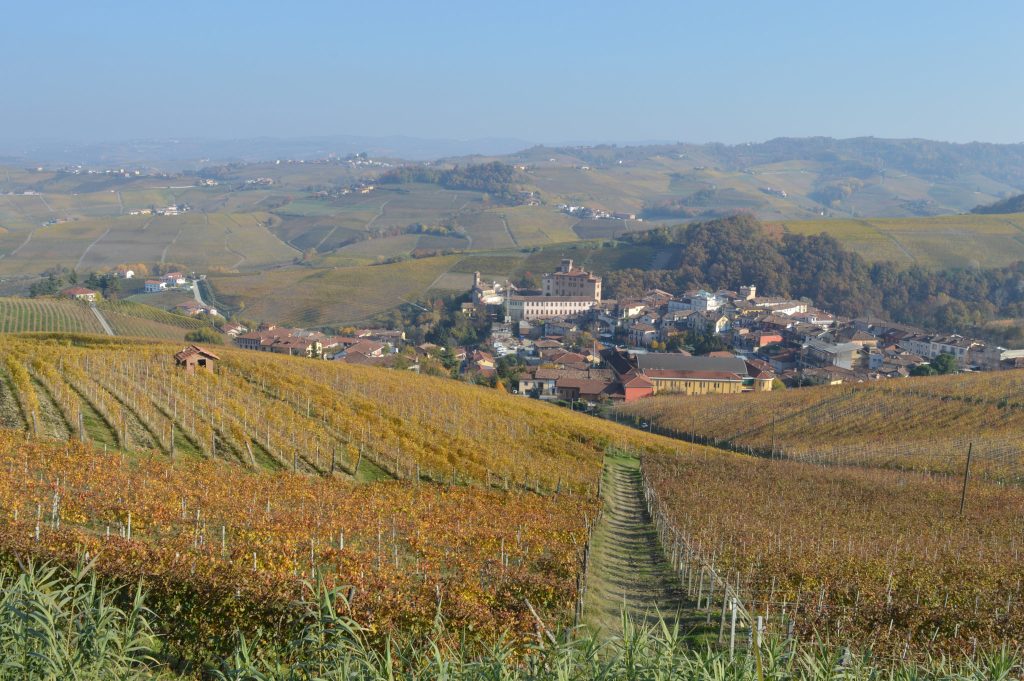
Last week, Ofa mentioned Piedmont, Barolo, Barbaresco and Nebbiolo in his intro. He talked about how these wines can look pale in the glass yet still carry a structure that competes with much fuller-bodied reds. That did not surprise me from Barolo.
In rugby terms, Barolo reminds me of a small number 9 who looks harmless from a distance, but the moment you give him space, he steps right in your face, controls the tempo, and reminds everyone he is running the game.
That is Barolo.
Pale in the glass, but powerful in the soul.
Ofa’s intro sparked me to write this week’s newsletter because Barolo is one of those wines I have always respected, but have only come across twice in my life. The first time was at a wine expo in Düsseldorf in 2018. The second was in Florence, celebrating my 33rd birthday with my little family.
Both moments stayed with me, not just because of the wine, but because Barolo is not something you see every day, especially here in New Zealand. And when you do see Barolo here, it usually comes with a hefty cost.
Barolo comes from Piedmont in northwest Italy, in the Langhe hills near the town of Alba. The official Barolo production area includes 11 communes, including Barolo, La Morra, Serralunga d’Alba, Castiglione Falletto and Monforte d’Alba.
The grape is Nebbiolo.
Not a blend. Not a supporting act. Barolo must be made from 100% Nebbiolo. This is where the wine becomes fascinating. Nebbiolo can look light in colour, sometimes almost like Pinot Noir, but the structure is completely different. It brings high tannin, bright acidity, perfume, power and longevity.
This is why Barolo can surprise people. You look at the glass and think, “This might be gentle.” Then you taste it, and the tannin, acidity and length tell you very quickly that this wine has serious backbone.
That is the number 9 stepping into your face.
Barolo is often described with aromas of roses, cherries, herbs, tar, leather, tobacco, earth and sometimes truffle as it develops with age. It is elegant, but it is not soft. It is beautiful, but it demands patience. It is one of those wines that does not give everything away at once.
Barolo is also a wine of time. By law, standard Barolo must be aged for at least 38 months, including 18 months in barrel. Barolo Riserva must be aged for at least 62 months, also with a minimum of 18 months in barrel.
That means Barolo is already a slow wine before it even reaches the shelf. The producer has to wait. The wine has to rest. The tannins need time to settle. And even after release, the best bottles can continue to develop for 10, 20, even 30 years or more when stored well.
This is one reason Barolo carries a higher price. It is not a quick wine to make. Producers have to hold stock for years before they can sell it. The region is also limited in size, and the demand for top Barolo around the world remains strong.
Barolo production is relatively small when compared with many global wine regions. The Barolo DOCG area produces around 14 million bottles from roughly 2,200 hectares of vineyard, and the wider protected wine region is overseen by a Consorzio with more than 550 members.
One of the most interesting parts of Barolo is that the village and vineyard can change the personality of the wine. La Morra and Barolo are often known for more aromatic, elegant and approachable styles. Serralunga d’Alba and Monforte d’Alba are often known for more structured, powerful and long-ageing styles.
In 2010, Barolo officially recognised specific geographical mentions, often called MGA, which allow producers to show more clearly where the grapes come from within the Barolo zone.
The winemaking technique is also part of Barolo’s story. Traditionally, Barolo was made with long maceration and aged in large old oak casks. This style often produced firm, tannic wines that needed years before they softened and opened up. Later, more modern producers started using shorter maceration and smaller oak barrels to make Barolo more polished, fruit-driven and approachable earlier.
Today, many producers sit somewhere in the middle. They respect the tradition, but they also understand that modern wine drinkers may not want to wait 20 years before opening a bottle.
For us in New Zealand, Barolo can feel far away. It is not the wine most people pick up casually from the supermarket. It is not usually sitting at eye level waiting for you at a friendly price. If you find it, it is often at a specialist wine store, on a restaurant list, or in the hands of someone who already knows what they are looking for.
For New Zealand readers who are curious to explore Barolo or Barbaresco, Caro’s is a trusted wine merchant worth checking. They often have a strong Italian and Piedmont selection, and it is a good place to start if you want to see what is available locally.
click on this link for Caro’s wine merchant for Barolo wines.
But maybe that is also part of Barolo’s charm.
Barolo asks you to slow down. It asks you to learn a little more before judging it. It reminds us that not all powerful wines are dark, heavy and obvious. Some wines carry their power quietly.
Like that small number 9.
The one who does not look like the biggest player on the field, but reads the game better than everyone else. The one who controls the tempo, talks all day, annoys the forwards, finds the gap, and then steps right in your face when you least expect it.
That is Barolo.
Pale in the glass, powerful in the soul.
The Wine Chief Takeaway
Barolo is not a wine that shouts at you straight away. It is pale, patient and powerful. It reminds us that true strength does not always need to look heavy in the glass. Sometimes the quietest wines carry the deepest story.
I have only come across Barolo twice in my life, once in Düsseldorf in 2018, and once in Florence Italy on my 33rd birthday with my little family.
But both times, I remembered it. And maybe that is the point of great wine.
It does not just sit in the glass. It stays with you
Until next week, malo ‘aupito,
The Wine Chief – Semisi Telefoni