
Bastille Day: Why It Matters to the Wine World
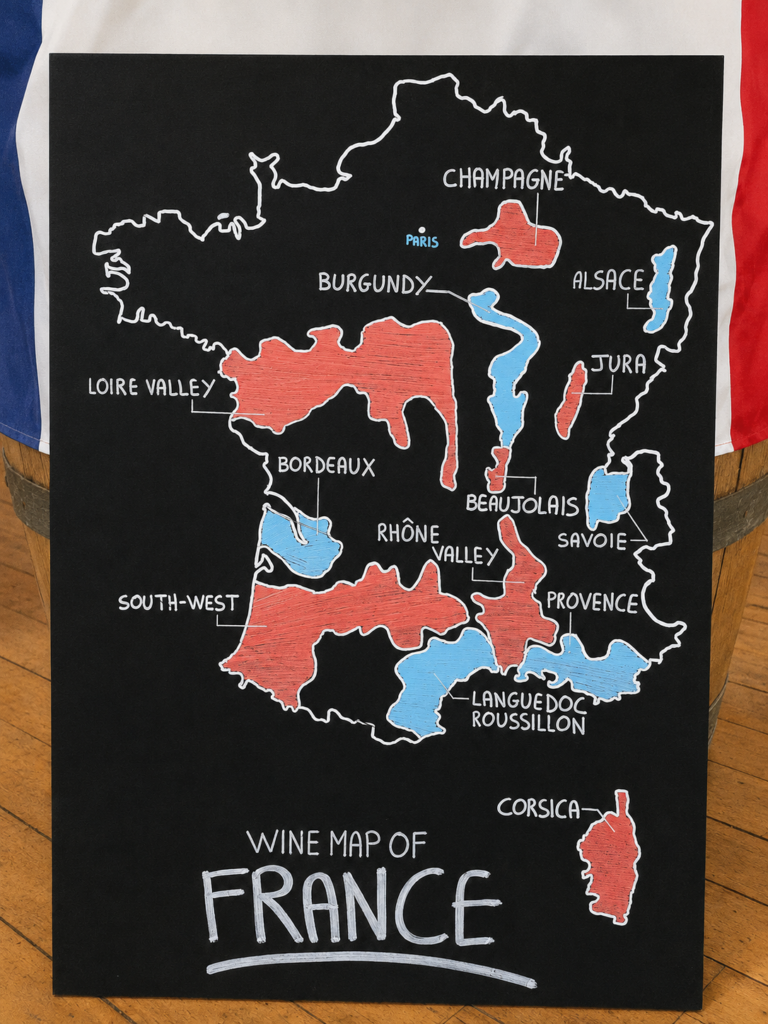
This week, on Tuesday 14 July, France celebrated Bastille Day its national day and one of the most significant dates on the French calendar. While many people associate the occasion with spectacular fireworks, military parades and national pride, for those of us in the wine world it carries an even deeper meaning.
Having lived and studied in France, Bastille Day always brings back incredible memories. The one that stands out most was the fireworks. As the clock struck 10:00 pm, the sky erupted into a display unlike anything I had ever seen. Back home in New Zealand, a fireworks display might last five or ten minutes. In France, it continued for a full 20 to 25 minutes, lighting up the night as thousands gathered together in celebration.
As spectacular as the fireworks were, there was always something else present: wine. It sat on family tables, in local cafés and beside the food being shared among friends. It was never necessarily the main attraction, but it was always part of the occasion because wine is deeply woven into French culture, regional identity and everyday life.
So why does Bastille Day matter to the wine industry?
Because the same pride France has in its history is reflected in the way it protects its wine regions, traditions and famous names. Champagne, Burgundy, Bordeaux, Chablis and many others are not simply wines they represent places, people and generations of knowledge that France has worked hard to preserve.
Long before I studied European Wine Law in France, I simply thought these names were brands.
I couldn’t have been more wrong.
They are places.
And in France, place is everything.
This philosophy is known as terroir, the belief that a wine expresses where it comes from. The climate, soil, altitude, vineyard aspect, grape variety and even the people who farm the land all contribute to the wine in your glass. It is why two Pinot Noirs grown only a few kilometres apart in Burgundy can taste completely different.
To protect this identity, France established one of the world’s most respected wine classification systems: the Appellation d’Origine Contrôlée (AOC).
These aren’t simply guidelines. They are strict rules. The AOC system determines where grapes may be grown, which grape varieties are permitted, how vineyards are managed, maximum yields, minimum alcohol levels, harvesting standards and, in many cases, even how the wine is made before it can carry the name of that region.
Take Champagne as an example.
A sparkling wine cannot simply be called Champagne because it uses the traditional method. It must come from the Champagne region and follow strict production rules developed over generations. The same principle applies to Chablis, Sancerre, Châteauneuf-du-Pape, Burgundy and Bordeaux.
That protection does something remarkable.
It protects the grower.
It protects the consumer.
Most importantly, it protects the reputation that generations of families have spent centuries building.
As I reflect on Bastille Day, I also think about New Zealand.
Although we are a young wine-producing nation compared with France, we are beginning to build our own regional identities. Around the world, people now recognise Marlborough for Sauvignon Blanc, Central Otago for Pinot Noir, Hawke’s Bay for Bordeaux-style blends and Syrah, and Martinborough for elegant Pinot Noir.
These names are becoming our signature.
The more we respect our regions, champion our growers and continue striving for quality, the stronger New Zealand’s reputation will become.
Perhaps that is the greatest lesson Bastille Day offers the wine world.
National pride isn’t only found in flags, parades or fireworks.
Sometimes it is found in a vineyard that has been cared for by the same family for generations.
Sometimes it is found in a name on a wine label that cannot be copied.
And sometimes it is found in a glass of wine that tells the story of a place better than words ever could.
Until next week,
The Wine Chief