
Pyramid Valley: The Story in the Glass Is Winning
A limestone hill, a swamp full of moa bones, and why wine with a real identity matters more than ever.
Mālō e lelei and bonjour, fellow wine explorers.
This week I read two wine stories, one after the other.
The first was hard news. New Zealand’s bulk wine market has crashed. Some grapes are left on the vine. Some vineyards are being pulled out.
The second was good news. Our wine exports passed two billion dollars again. The strong brands are growing.
Same country. Same year. Two very different stories.
So what is the difference?
I think one word explains it. Identity.
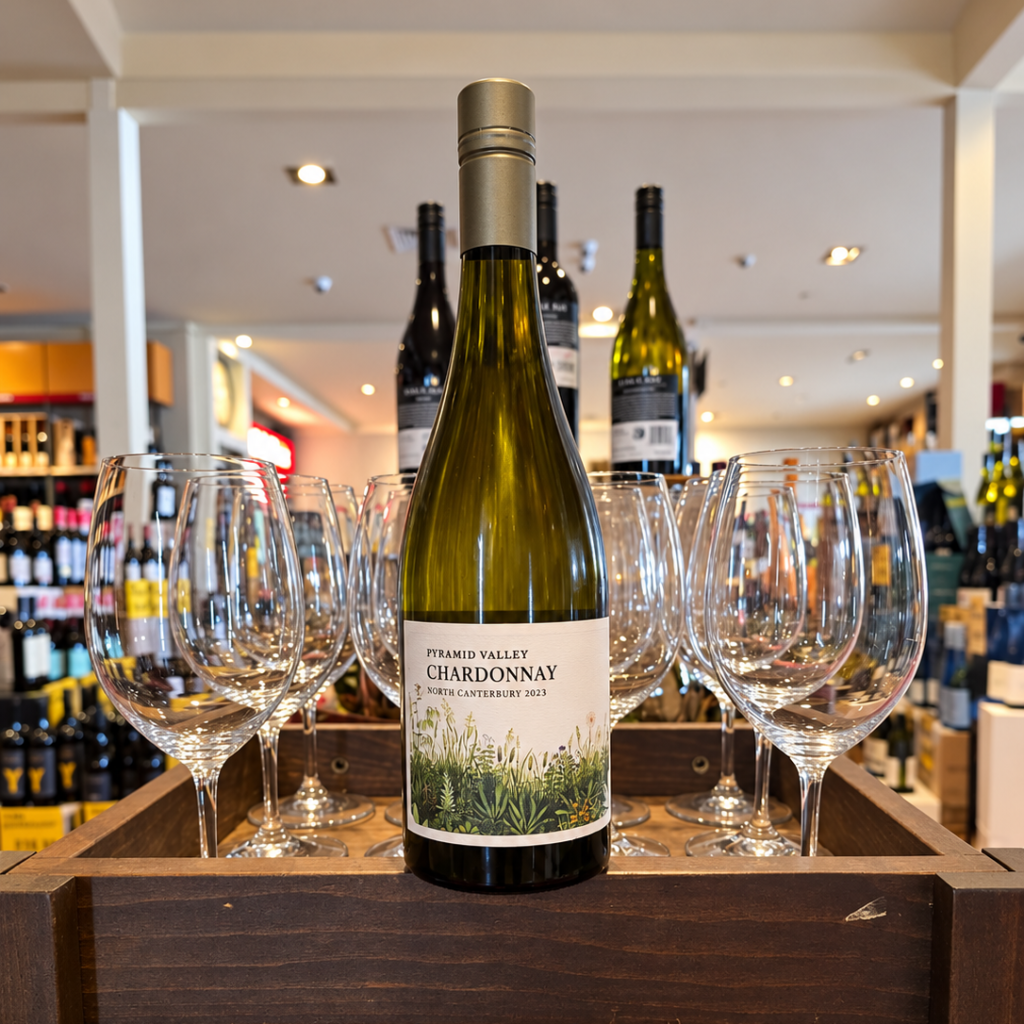
And one small vineyard in North Canterbury shows it better than almost anywhere.
A Swamp, a Hill and a Dream
Pyramid Valley sits near Waikari (why-KAH-ree), in the hills of North Canterbury.
It is tiny. Around 2.2 hectares of vines. Smaller than most school fields.
In 2000, Mike Weersing and Claudia Elze planted it. Mike was Californian, but he trained in Burgundy. They had searched the world for fifteen years, looking for one thing: limestone.
They found it here. Clay over limestone, on slopes shaped like an amphitheatre.
And the name? It comes from an old swamp on the land, where moa bones have been dug up.
Think about that. The history under those vines is older than any wine label.
They farmed biodynamically from day one. That means treating the vineyard as one living farm. Soil, plants, animals, seasons. No shortcuts.
In 2017, Steve Smith, a Master of Wine, and Brian Sheth took over the estate. Mike passed away in 2020. Winemaker Huw Kinch carries the work forward today.
Named After the Weeds
Here is my favourite part.
The four vineyard blocks are named after the meadow plants that grow in each one.
Earth Smoke and Angel Flower are Pinot Noir. Lion’s Tooth and Field of Fire are Chardonnay.
Not a brand. Not a score. The plant under your feet.
When I studied at the Burgundy School of Business in Dijon, this was the first big lesson. In Burgundy, the land has names. Small plots called climats (klee-MAH), each with its own story. One side of a stone wall can taste different from the other.
As a Tongan boy from Glen Innes, I found that hard to believe.
Then I tasted it. And I understood.
We know this in Tonga too. In Ha’apai, the old people can tell you which land grows the best ʻufi (Yam), and why. The land has a memory. Families carry the memory of the land.
That is terroir (teh-RWAHR). Simple as that.
Great wine doesn’t just come from a grape. It comes from a place, and the people who listen to it.
Why Identity Is Winning Now
Back to those two news stories.
About 90% of New Zealand wine is exported, and most of it is Sauvignon Blanc. When wine is made in huge volumes with no story, it can only compete on price. And price is a race to the bottom.
But wines that speak of a place? People are still reaching for them.
That is what Pyramid Valley has always done. Small blocks. Real farming. Wines named after the ground they come from.
Different soil. Different plants. Different wine.
And I love that.
How to Find Wine with a Story
You don’t need a cellar or a big budget. Try this next time you shop:
- Look for a place, not just a grape. A region, a valley or a vineyard name on the label is a good sign.
- Read the back label. Does it tell you who made it and where? Or only “crisp and refreshing”?
- Start with the entry wines. Pyramid Valley’s Botanicals Collection is special-occasion money. Their Colours Collection (a Sauvignon+, an Orange and a Rosé) is a more everyday way in.
- Ask one question at the shop. “What’s the story behind this one?” A good wine shop will light up.
- Taste two side by side. A big-brand Sauvignon Blanc next to a single-vineyard one. Talk about the difference at the table.
Final Pour
Wine Chief takeaway: buy the story, not just the bottle.
When a wine knows where it comes from, you can taste it. And when we choose those wines, we keep the stories alive. The growers. The land. The people.
Maybe that is the real lesson from a quiet hill in Waikari. I will be purchasing a Pyramid Valley wine this weekend, i will keep you posted.
Choose well, drink with joy, and keep it simple.
Mālō ʻaupito,
Semisi Telefoni — The Wine Chief