
Old World Rules, New World Question
On Ofa’s piece, and why the new world might need to start protecting its own names too.
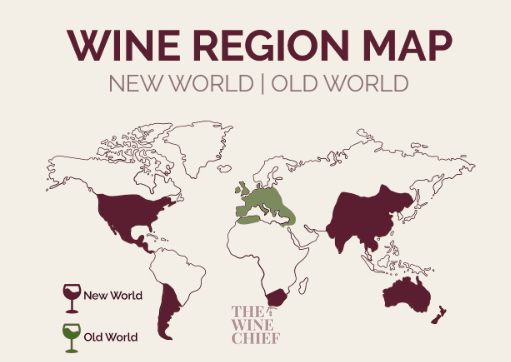
Ofa raised an important question last week regarding regulations in the wine industry, particularly around the New World, that I’d love to dive deeper into.
“You have these bodies that protect the name of each region,” he wrote. “Champagne, Burgundy, Bordeaux. All the Italian regions have their own version. But in the new world, it’s kind of blurred the lines.”
I read it twice. Because he’s right.
The Old World Doesn’t Leave It to Chance
In Burgundy, a wine can only be called Burgundy if it comes from an exact, mapped-out plot. Not a region. A plot. Monks first identified and separated out these plots back in the Middle Ages and French law locked those boundaries in, in 1936. Ninety years on, nobody’s moved them.
In Champagne, nearly the whole blend comes down to three grapes, Pinot Noir, Pinot Meunier, and Chardonnay, well over 99 percent of everything planted. On top of that, the grapes must be picked by hand, not machine, every single harvest, every single year. It’s the law, because a bruised berry changes everything once it hits the press.
And in some of Burgundy’s most prized parcels, growers won’t even bring a tractor through. They plough with horses instead. Not because a rule forces every estate to but because that soil is too precious to compact, and generations of family knowledge say so.
Three examples. Three regions. Same underlying idea: protect the process, and you protect the wine.
Generations, Not Just Regulations
Here’s the part I love most. These aren’t rules dreamed up by a committee last year. They’re generations of family knowledge, written down and made official. A grandfather’s instinct about which slope ripens first. A grandmother’s memory of the year the frost came late. Passed down, tightened up, turned into law.
That’s what I felt studying in Dijon. Growers there don’t talk about “the appellation” like it’s paperwork. They talk about it like it’s family.
The regulation isn’t the point. What it’s protecting is the point.
Where New Zealand and Australia Come In
Now here’s Ofa’s real question, and it’s a fair one. New Zealand and Australia are new world. Younger regions. Shorter histories. But Marlborough Sauvignon Blanc and Clare Valley Riesling have already proven something in a fraction of the time Burgundy took.
So should they have their own version of these protections?
I think about Clare Valley. I think about Central Otago Pinot Noir, grown on slopes that genuinely earn the name. These regions have already found their identity. What they haven’t always got is the legal armour around it — the kind that stops the name being stretched thin by volume, or borrowed by a label from three valleys over.
This isn’t about exposing anyone. It’s about celebrating what’s worth protecting, before it needs protecting.
Wine Chief Takeaway
A couple of things you can actually use next time you’re choosing a bottle:
- Look for AOC or AOP on a French label, DOC or DOCG on an Italian one. That’s the region’s own regulatory body putting its name behind what’s in the bottle, grape variety, yield, method, boundary, all locked in.
- In New Zealand and Australia, look past the region name to the producer. Ask your wine shop who’s farming for quality over volume. Marlborough and Clare Valley both have growers already doing, by choice, what Burgundy does by law.
- When you find one, that premium isn’t just marketing. It’s the cost of doing it properly.
Final Pour
Old world. New world. Different histories. Same question underneath.
Is this wine what it says it is? Old world regions answered that question generations ago, then wrote it into law. New world regions are still writing theirs.
Value the art. Not just the volume. That protects the producer, the region, and you, the person at the table.
Mālō ‘aupito,
Semisi Telefoni — The Wine Chief