
The heatwave that changed Champagne’s rules
The heat came early, the juice came short, and the bottles are about to get harder to find.
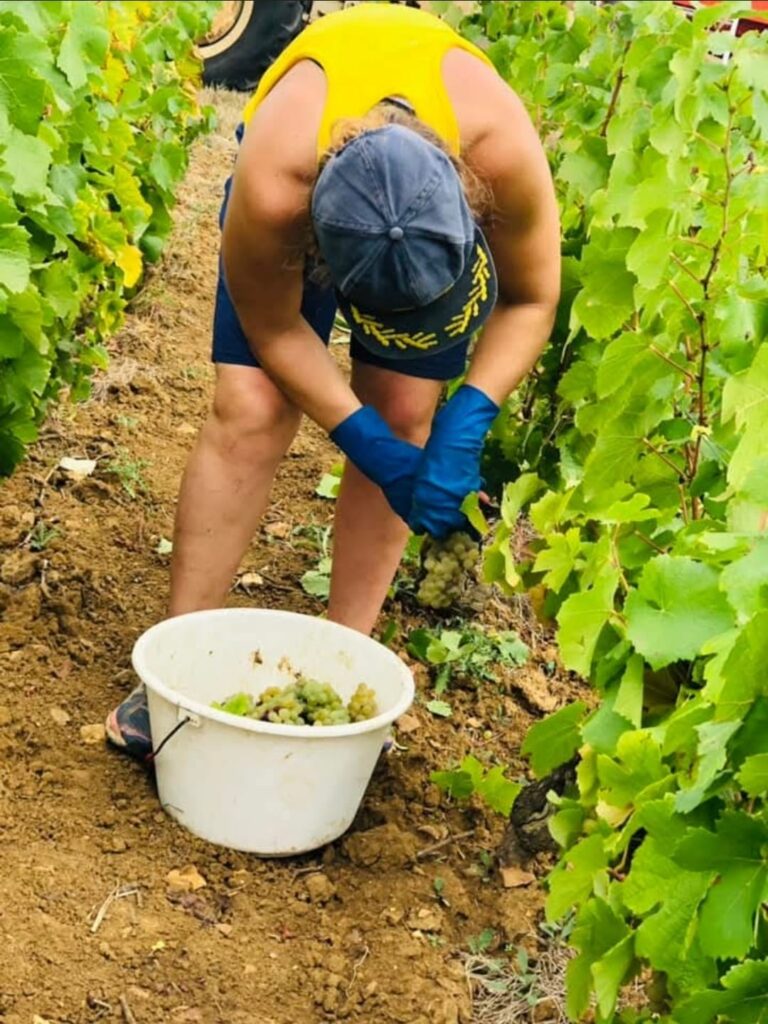
Mālō e lelei and bonjour, fellow wine explorers.
I’ve got a few mates scattered around France from my French class days. Every year, around vintage time, the messages start.
This year they came early. Way early.
August. Not September. Not October. August.
Champagne is the coldest serious wine region in France. That’s the whole point of it. Cold means slow. Slow means acidity. Acidity is the backbone of every bubble you’ve ever enjoyed.
Then came the heatwaves. Four of them. Some counts say five.
The first grapes were cut on 6 August the earliest harvest ever recorded in Champagne.
And here’s the number that matters: the region is looking at close to half the volume it made in 2025.
Less wine. Better wine. Same thirsty world.
Bien sûr, that’s going to cost you.
What actually happened over there
June hit 40°C in parts of Champagne. Then drought on top of it, and a spring frost that had already knocked out a big chunk of the crop before summer even started.
The vines did what any living thing does when it’s thirsty. They pulled water back out of the grapes to save themselves.
Sugar concentrated. Ripening sped up. The official harvest opened on 12 August, most growers were in by the 17th — about two weeks earlier than last year.
One grower, Alexandre Gobillard, put it in a line I can’t stop thinking about:
“My grandfather’s generation harvested 100 days after flowering, my father’s 90 days, and today we’re down to 80.”
Three generations. Twenty days gone.
Here’s the bit that hits your wallet
Small berries. Light bunches.
Average bunch weights came in under 100 grams, in parts of the Vallée de la Marne, under 90. Grape weights at their lowest in twenty years.
Small grapes are lovely for flavour. Skin-to-juice ratio goes up, concentration goes up. But it means one thing at the press: less juice.
France’s Ministry of Agriculture has Champagne down around 46% on its five-year average. Some in the region are talking about half a normal crop. Across all of France, 2026 is tracking at about 34 million hectolitres the smallest harvest in roughly seventy years.
So: fewer bottles. Made from riper fruit than Champagne has ever pressed.
Is it good wine, though?
Probably yes. Possibly exceptional.
The Comité Champagne says the crop has “all the hallmarks of producing great, perhaps even exceptional, wines.” Healthy fruit. Clean. Ripe. The kind of year that makes vintage Champagne worth declaring.
But hold both things at once. Great quality. Tiny volume.
And it doesn’t hit the shelf tomorrow. Non-vintage Champagne rests on its lees for years; vintage, six or seven. So, the shortage arrives quietly, in 2029, 2030 and it lands on a category that already sells €5.7 billion a year.
Before you panic about 15% Champagne
Let me clear something up, because the headlines are doing a lot of shouting.
The rule change doesn’t mean your Champagne is suddenly 15%.
Think of it like a speed limit. France raised the ceiling from 13% to 15% that’s the highest the law will now allow. It’s permission, not a prediction. Almost nobody is going to drive at it.
What actually came off the vines? David Chatillon, co-chair of the Comité Champagne, said the average across the region landed below 12%. That’s a touch riper than usual. It is not a different drink.
And remember there’s a second step. The grapes make a still base wine first. Then the bubbles come from a second fermentation in the bottle, which adds roughly another 1.2 to 1.5% on its own. So, a base wine at 11.5% becomes a Champagne around 12.5 to 13% more or less where your favourite bottle already sits.
The ceiling got raised so that in the hottest years, growers aren’t legally forced to throw out fruit that ripened too well.
That’s not a wine getting stronger. That’s a rulebook catching up with the weather.
The number to watch isn’t the alcohol. It’s the volume.
Wine Chief takeaway — five moves for the next 12 months:
- Buy your favourite non-vintage now, not later. The bottle on the shelf today was made from grapes picked years ago, at old prices. That gap closes.
- Two bottles, not one. One to drink, one to lay down. That’s not collecting. That’s planning.
- Learn the grower names. Small producers look for “RM” in tiny print on the label get hit hardest by short crops. Support them while they’re still pouring.
- Widen the net. Crémant de Bourgogne, Crémant de Loire, English sparkling and our own Marlborough traditional-method bubbles are made the same way for a fraction of the price. I’ve poured Crémant at my own table and nobody complained.
- Ask one question in the shop: “What’s your best traditional-method sparkling under $40?” Then trust the answer. That question does more work than any score ever will.
Final Pour
Every bottle carries the weather of the year it was born. That’s the story in the glass. 2026 will taste like a hot, hard, historic summer, and one day somebody will pour it for you and say this is what that year was like.
That’s not a reason to be gloomy. It’s a reason to pay attention.
Open the good one. Share it wide. Tell people why.
Mālō ‘aupito,
Semisi Telefoni — The Wine Chief